4 Reasons Chiang Mai Should Be Your First Stop in Thailand
The beaches will still be there. Here are 4 reasons to start in the north.

Thai Patton
Thailand's beaches are not going anywhere. The limestone karsts rising out of turquoise water in Krabi, the long white stretches of Koh Lanta, the famous chaos of Koh Samui will all be waiting for you. But if this is your first trip to Thailand and you are trying to decide where to begin, the south is not where I'd send you. Start in Chiang Mai. Go south after. Four reasons why.
Reason One: The Food Wins
Bangkok gets the global reputation. The south gets the seafood and the coconut curries. But Northern Thai cooking is its own distinct tradition, shaped by the mountains and the farmers and the jungle rather than the coast, and it is some of the most exciting food in the country.
You will notice it immediately. Less coconut milk. Less seafood. More fresh herbs, more fermented flavors, more dishes built around what grows in the surrounding hills. Sticky rice replaces jasmine rice as the starch of choice, served in small woven baskets and eaten by hand. You pinch off a piece, press it into a small spoon shape with your fingers, and use it to scoop whatever is in front of you. It takes about thirty seconds to learn and you will do it for every meal.
Chiang Mai is also the second largest city in Thailand outside of Bangkok, which means the food landscape is genuinely varied. Modern food courts sit alongside Michelin-recognized street stalls. Higher-end dining that takes Northern Thai ingredients seriously sits alongside markets where a full meal costs almost nothing.
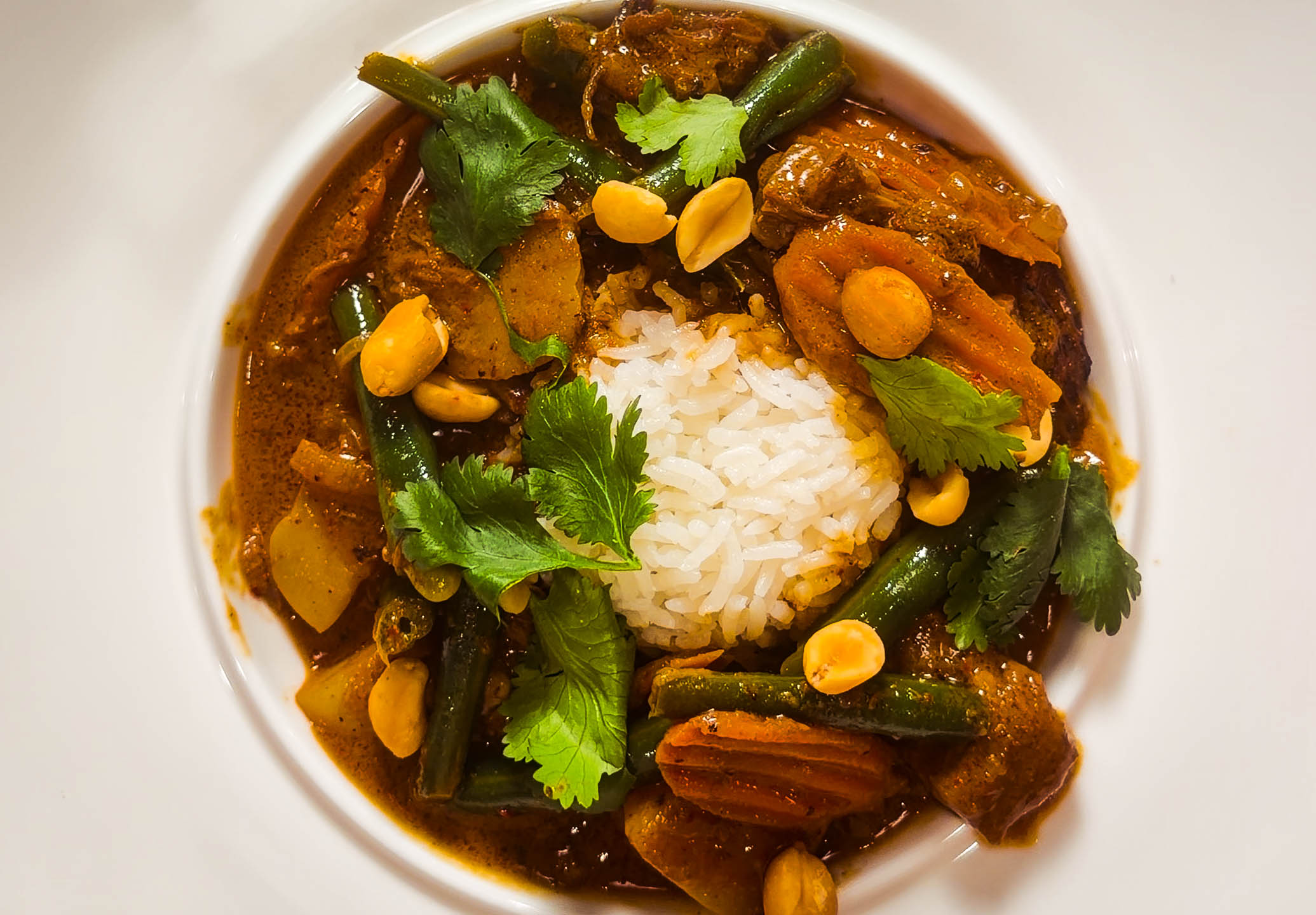
And then there is the khao soi. If you eat one dish in Thailand, this is the argument for making it this one. A spiced curry broth built on chicken, ladled over egg noodles, topped with crispy fried noodles for crunch, and finished with pickled mustard greens, fresh lime, and shallot. It is warming and complex and nothing like the Thai food you have had at home. Order it on your first day. Order it again before you leave.
Reason Two: Chiang Mai Is the Heart of Thailand
Chiang Mai was founded in 1296 as the new capital of the Mangrai Dynasty. The name means new city, which feels like an understatement for a place that has been continuously inhabited for over 700 years. The old city is defined by a moat and ancient walls, and inside that 1.6 square kilometer boundary there are more than 30 temples. That works out to roughly one per block. You will round a corner expecting nothing and find yourself standing in front of something jaw-dropping you did not plan for. That is the pace of the old city.

The temples are not uniform. Each one has its own character, its own history, its own particular beauty. Some are immaculately maintained. Others are punctuated by ruins that have stood long enough to grow into the landscape around them. Outside the walls, another 270 temples spread across the city and surrounding area. The one that cannot be missed is Doi Suthep, a UNESCO site sitting atop the highest mountain overlooking the Chiang Mai valley. You reach it by climbing 306 steps flanked by serpent-shaped balustrades rising through the jungle. The views look out over the entire valley. Make the climb.
Beyond the temples, Chiang Mai's cultural life extends into its handcraft villages. Traditional paper umbrellas hand-spun, Thai silk woven on traditional looms, hand-carved teak furniture and sculpture in workshops where the craft has been passed down across generations. These are working villages, not tourist performances.

And if you love elephants, the ethical sanctuaries outside Chiang Mai are among the best reasons to be in this part of the country. A note on ethics, because it matters: not every sanctuary deserves the name. Riding is an immediate disqualifier. Elephants' backs are not built to carry humans. Avoid anywhere offering shows or tricks. No bullhooks, no chains, no forced bathing, small group sizes. Be skeptical of very cheap tours. Feeding a single elephant costs tens of thousands of baht per month, and a tour priced under 1,500 THB is cutting costs somewhere. We have been to a sanctuary outside Chiang Mai and spending a day with a herd on their terms is one of the better things you can do anywhere in Southeast Asia.
Reason Three: It Is Easy
The south is logistically demanding in a way that Chiang Mai is not. Getting to the best islands requires ferries, coordination, and a working knowledge of which boats run when and from where. When you do not speak the language and it is your first time in the country, that coordination can turn a vacation into a project.
Chiang Mai is walkable. The old city is compact enough to cover on foot. Tuk-tuk rides are short, and Grab, Thailand's ride-sharing app, makes getting around even easier. There is enough to see within wandering distance that you can structure very little and still fill every day.
Reason Four: Your Baht Goes Further

The south attracts more foreign visitors, which drives up prices across the board. Resorts are bigger, fancier, and more expensive. Food near the tourist areas costs more because the market supports it. A 1,500 baht per night hotel in Chiang Mai is a genuinely nice room. That same budget in a popular southern beach town gets you something considerably more modest. Chiang Mai lets you spend less and experience more.
Go South After
None of this is an argument against the beaches. The south is spectacular and you should go. But starting there means starting with the part of Thailand that has already been optimized for foreign visitors. Starting in Chiang Mai means starting with the part of Thailand that is still primarily for Thailand.
The food is better. The temples are extraordinary. The logistics are forgiving. And the khao soi alone is worth the flight.
Go south after. You will appreciate it more.
Catch up
Recent Features

Coffee
Everything You Know About Coffee is Goatshit.
The Kaldi legend has been repeated for centuries. It has one problem: it never happened. Here's where coffee actually comes from, and why the person who pulled your shot deserves better than a fairy tale.

Coffee
Four Coffee Shop Red Flags
After half a million drinks behind the bar, I can size up a coffee shop before I even order. Here is what I am looking for and why it matters.

Chicago
The Som Tam Test: Taste the Freeland
How I judge Chicago's 300-plus Thai restaurants with one salad, and the four-hundred-year, multi-continent history hiding inside it.