Neapolitan Pizza Dough
Four ingredients. Skip the delivery. One dough worth planning for.
Jump to Recipe

I have eaten a lot of pizza. I have written about pizza. I have opinions about pizza that have made people at the table uncomfortable. And yet, as much as I love a tavern-style square — thin, cracker-crisp, party-cut, built for a beer in the other hand — there is something about a properly made Neapolitan pie that exists in a completely different category. It is not better. It is not worse. It is its own argument, and one I keep coming back to.
Neapolitan pizza is a discipline. The dough is four ingredients: 00 flour, water, salt, yeast. Nothing else. No oil, no sugar, no shortcuts. The magic is entirely in the ratios, the timing, and the heat. Get those three things right and the dough does everything. It stretches without tearing, blisters in the oven, chars at the crust into those dark leopard spots that tell you the fire did its job. Get them wrong and you have a flat, dense disc that no topping will save.
The technique here is a cold ferment, which means you are starting this dough the day before you plan to eat it. That is not a complication. That is the recipe. Time is the ingredient that 00 flour and instant yeast cannot replace on their own. The cold ferment develops flavor, builds structure, and gives the gluten enough time to relax so the dough stretches without fighting you. A same-day dough is a different product, and not the one you are after here.
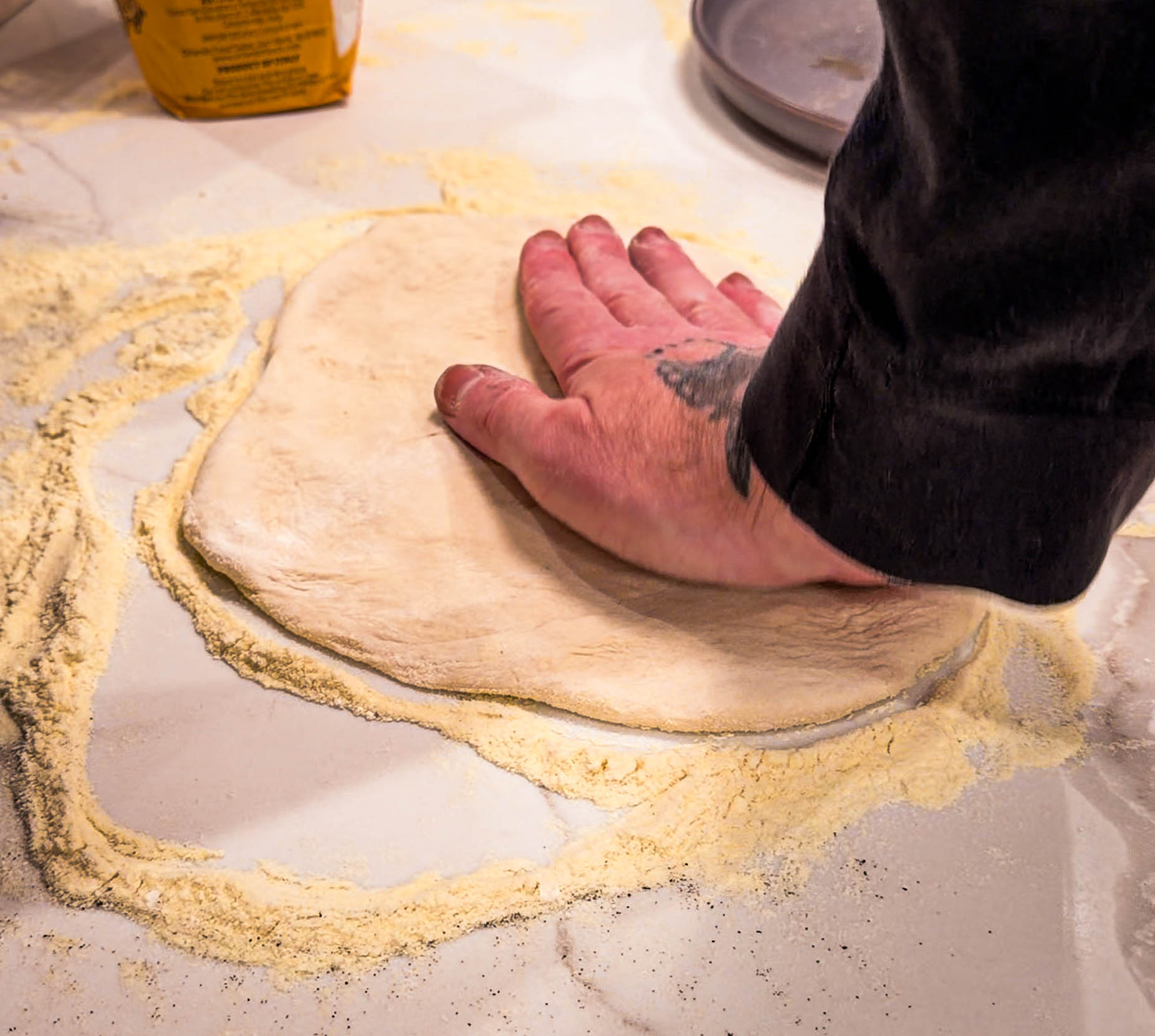
The process looks like this: you mix and autolyse the flour and water first, letting them hydrate before the salt and yeast go in. The autolyse is a rest that starts gluten development without any mechanical effort. The flour and water do the work on their own while you wait. Then you knead, shape, and put the whole thing in the fridge as a single bulk mass. Tomorrow afternoon, you divide, ball, and proof at room temperature for a couple of hours. By evening, you are stretching and firing.
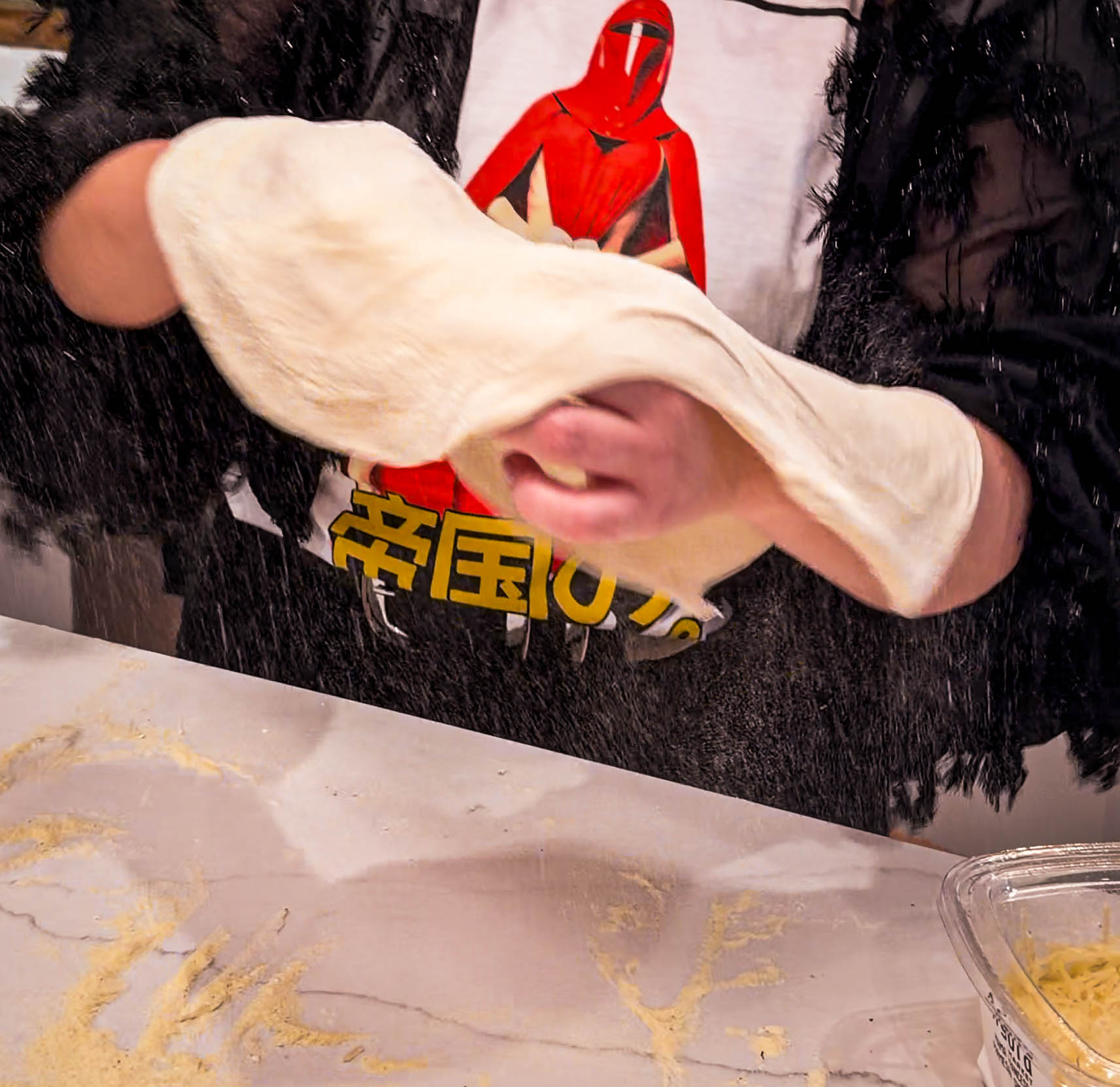
Now, about the heat. You do not need a pizza oven for this. You need a screaming hot surface and the patience to let it get there. A pizza stone, a cast iron griddle, or an upside-down cast iron pan are all solid options. No stone or griddle? An upside-down sheet pan works too. Whatever you are using, put it in the oven, crank the temperature to its absolute maximum, and leave it for at least 45 minutes. The goal is a surface so hot that when the dough hits it, steam generates immediately, puffing the crust up fast enough to create a crunchy exterior with a soft, open interior. That moment of contact is everything.
The difference between a pizza oven and a home oven is recovery time and peak temperature. A pizza oven holds heat and rebounds fast after you open the door. A home oven loses heat with every launch and does not get as hot to begin with. A Neapolitan in a pizza oven cooks in about ninety seconds. In a home oven with a properly preheated surface, plan for eight to twelve minutes depending on your toppings and how hot your oven runs. Check the bottom. When it is dark and the crust is blistered, you are done.
A few other things worth knowing before you start. 00 flour is not optional. It is milled to a much finer grind than all-purpose and has a different protein content that behaves differently under high heat. Cool room temperature water matters because warm water activates the yeast too fast and throws off the timing. Stretch by hand, not with a rolling pin. A rolling pin deflates the gas bubbles that took two days to develop. Press from the center out, leaving the cornicione, the outer rim, thick and untouched.
This dough makes six balls at roughly two-fifty grams each. That is six pizzas, which is either a dinner party or a very good week depending on your situation.

Recipe
Ingredients
900g 00 flour
585ml cool room temperature water
25g fine sea salt
2g instant dry yeast
Steps
Mix and autolyse
Combine the flour and water in a large bowl. Mix by hand just until it comes together into a shaggy dough with no dry spots. Cover and rest for 30 minutes.Add salt and yeast, knead
Sprinkle the salt and yeast over the rested dough. Knead by hand or with a stand mixer dough hook for 8 to 10 minutes until smooth, elastic, and tacky but not sticky.Rest at room temperature
Shape into a ball, place in a lightly oiled bowl, and cover tightly. Rest at room temperature for 45 minutes.Cold ferment
Move the covered dough to the fridge as one bulk mass. Leave it for 23 to 27 hours. Pulling it out anywhere between 1pm and 4pm the following day is fine.Divide and ball
Turn the dough out onto a floured surface and divide into 6 equal pieces, about 250g each. Shape each into a tight, smooth ball.Final proof
Arrange on a floured tray, cover loosely, and proof at cool room temperature for 2 to 3 hours until pillowy and roughly doubled.Stretch and fire
Get your surface screaming hot before you stretch anything. If you are using a pizza oven, fire it as high as it will go. If you are cooking indoors, place a pizza stone, cast iron griddle, upside-down cast iron pan, or upside-down sheet pan in the oven and preheat at the highest temperature for at least 45 minutes. Press and stretch one ball at a time into a 10 to 12 inch round, keeping the outer rim thick. Dress it light and launch on a well-floured peel. In a pizza oven: cook for about 90 seconds, turning every 15 to 20 seconds, until leopard-spotted and blistered. In a home oven: cook for 8 to 12 minutes until the bottom is dark and the crust is blistered, rotating once halfway through.
At a Glance
Prep Time:
30 minutes
Inactive Time:
24 to 48 hours
Cook Time:
90 seconds
Serves:
4-6
Difficulty:
Easy
Neapolitan Style
Pizza
Dinner Party
FRESH ON THE MENU
Latest Recipes

Category
One pot, whatever vegetables you’ve got, and dinner on the table before delivery finds your building.
Lemon Chicken Orzo for When You Don’t Want to Cook

Category
Czech bread dumplings: yeasted dough, stale bread, and a pot of boiling water.
Knedlíky

Category
Czech braised beef in a blended root vegetable cream sauce, made for Allen’s 40th on a Wednesday.
Svíčková

Category
Beef fat stands in for pork belly in a lazy one-pot stew that waits until everyone gets home.
Skirt Steak Kimchi Jjigae with Leftover Pot Roast Fat