The Japanese Omelette
Smooth, pale, custardy inside. It takes practice. It's worth the ugly ones.
Jump to Recipe
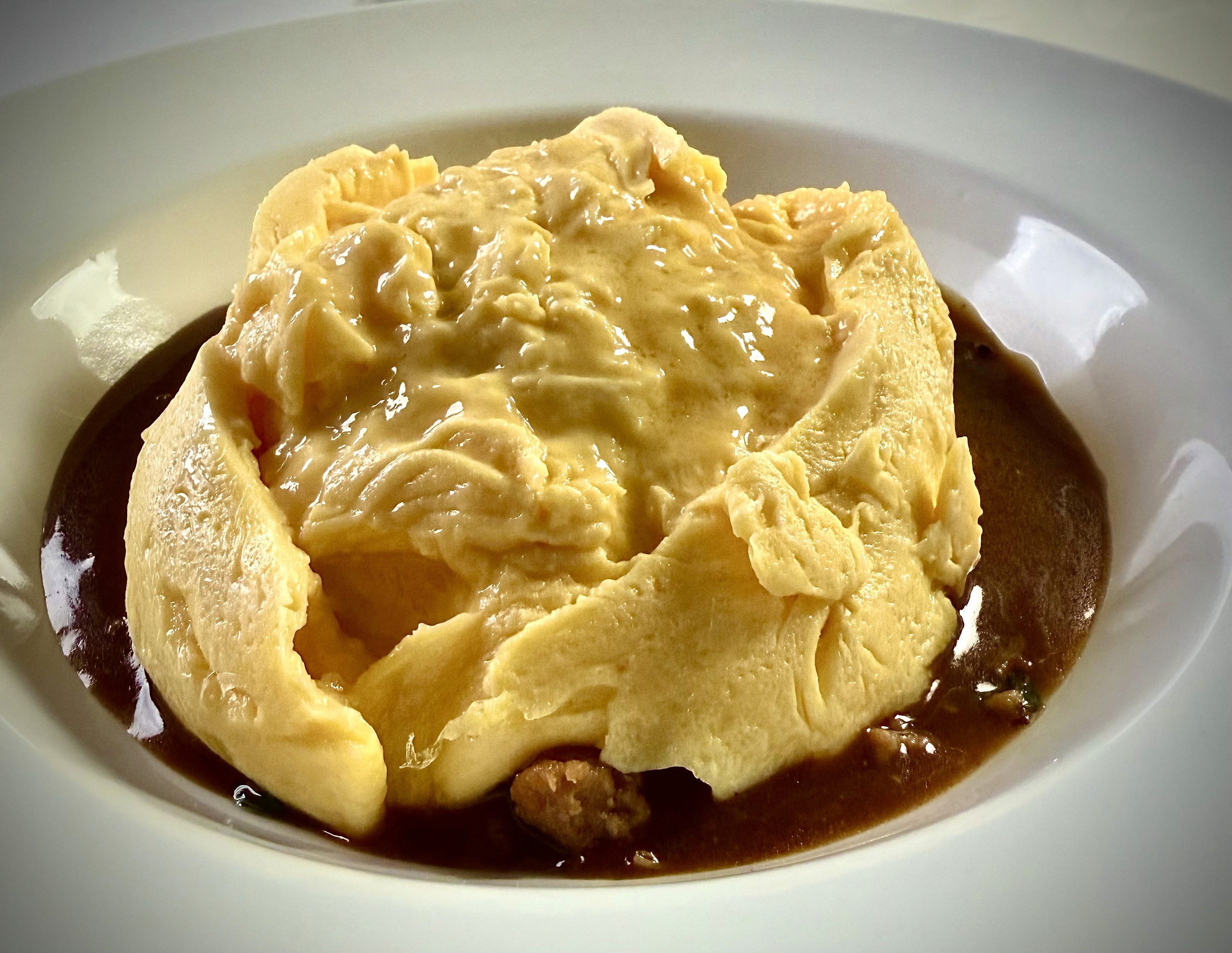
This is the hardest technique in the Akutagawa recipe. I want to be honest about that upfront.
Not hard like "this requires culinary school." Hard like "this requires doing it wrong a few times before your hands understand what your brain is trying to tell them." There's a flip involved. The flip is the thing. Once you have it, you have it. Getting there takes a couple of ugly omelettes and the willingness to eat them anyway.
Here's the good news: ugly omelettes still taste excellent.
The goal is a smooth, pale egg shell with no color, no browning, no visible seam. The inside should be soft and custardy, barely set, the kind of thing that spills slowly when you slice it open. That interior is what you're protecting through every step of this process.
Temperature is everything.
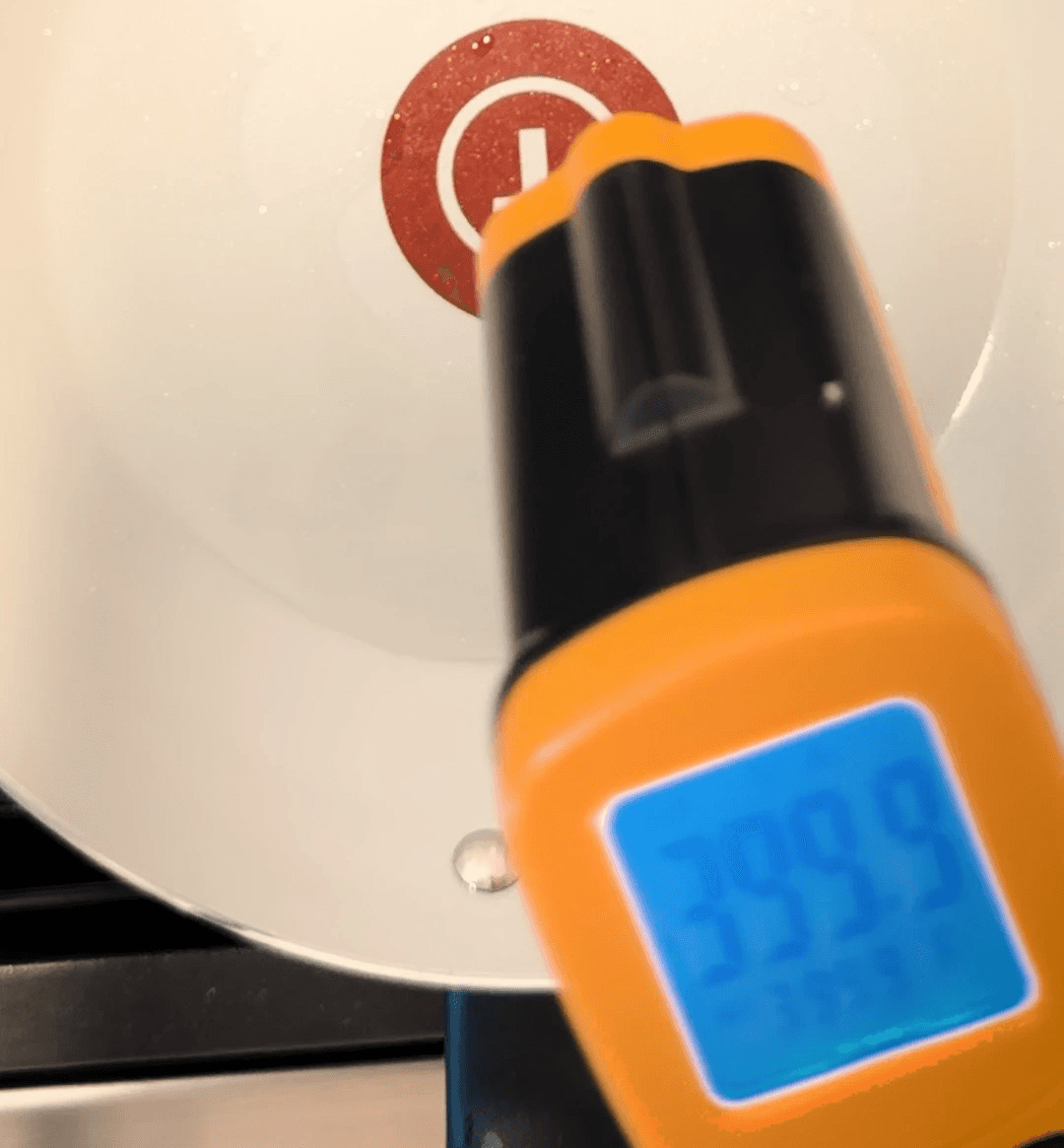
Not a feeling. Not a guess. If you have an infrared thermometer, use it. You want 400°F at the edges of the pan before the eggs go in. Too cool and the omelette steams instead of setting, and you lose the ability to shape it. Too hot and you get color, and color means you've already lost.
Butter in the pan, foaming but not browning. That's your visual cue if you're going without the thermometer. The moment it foams and the foam starts to subside, you're in the window.
The scramble builds the structure.
Eggs in. Immediately start scrambling in small circles with a spatula, vigorous but controlled, on and off the heat. Five seconds of scrambling, two seconds of resting. You're building soft curds without letting anything set too hard. At around thirty to forty seconds, when the eggs are about 60% done, slam the pan down on the burner a couple of times to flatten everything out. Let it sit for five to ten more seconds to finish setting the base.
Shaping is about patience and coaxing, not force.
Take the pan off the heat. Scrape the edges free from the sides. Starting at the back of the pan near the handle, fold the corner of the egg over and begin rolling it forward, letting the loose curd pool at the far edge. Put that far edge back on the heat for five more seconds to set the pool slightly. Scrape the far edge free and get ready for the flip.
The flip is the hard part.
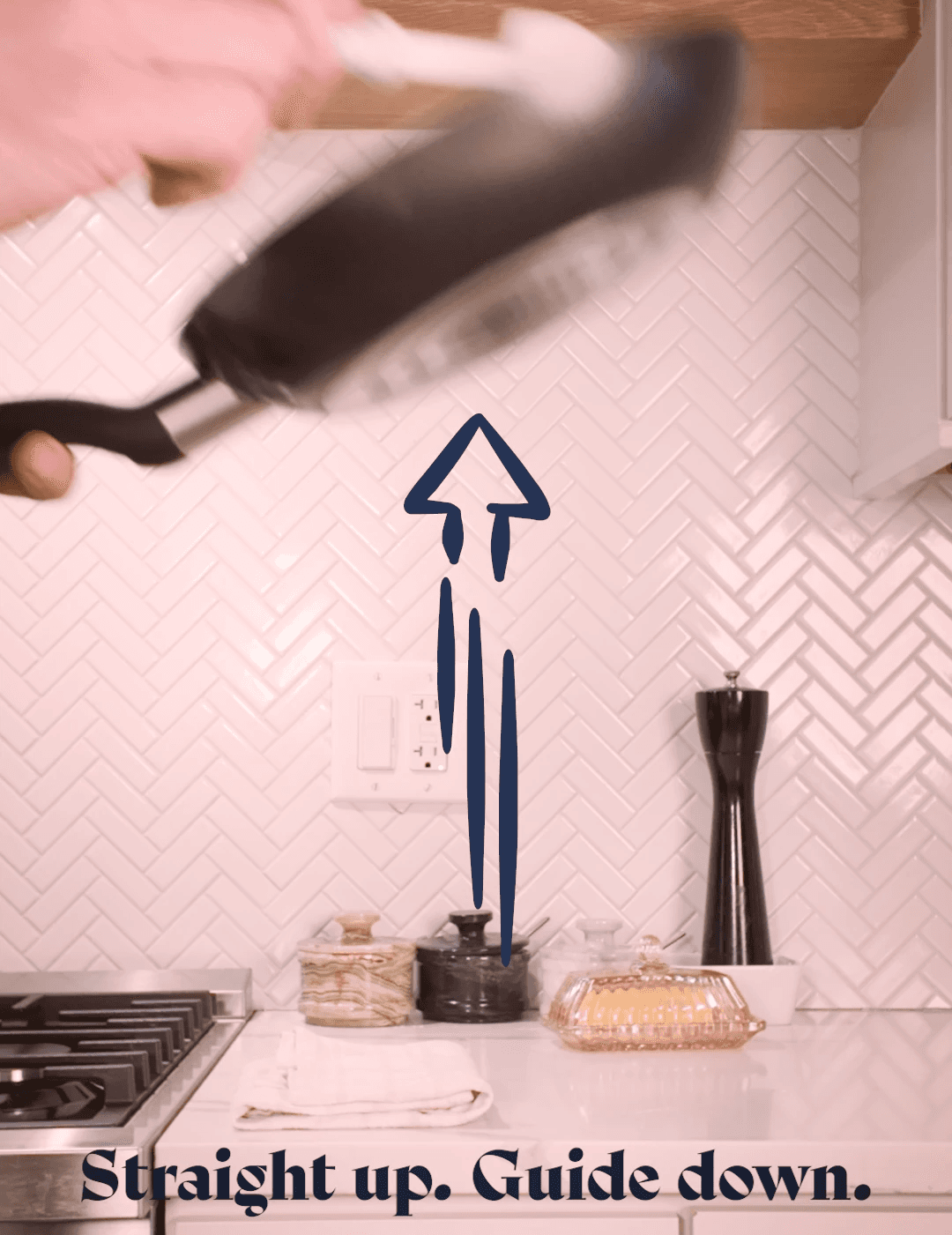
When you sauté normally, you push the pan forward and up. This flip is different. You move the pan straight up, hold a spatula over the omelette, and guide it over gently so it lands without tearing. If the shape isn't perfect, don't panic. Soft curds will fill in gaps and seal themselves. Use the spatula to nudge things back into place.
This is the part that takes practice. A bag of rice shaped roughly like an omelette makes a good stand-in for getting the motion into your muscle memory before you commit actual eggs to the process.
The flop is the finish.
Back on the heat for five seconds to seal the seam and give it a final set. Then take it off completely. Hold the handle with your hand facing up and tip the pan to 45 degrees, coaxing the omelette toward the edge. When it reaches the lip, tip the pan all the way to 90 degrees and let it flop onto the plate. Use a kitchen towel to shape it if needed. It should be a smooth oval, slightly rounded on top, seam side down.
Slide it open with a knife at the table. The inside should spill. That's the whole point.

Recipe
Ingredients
3 large eggs
1 tbsp heavy cream or whole milk
Pinch of kosher salt
White pepper to taste
1 tbsp unsalted butter
Steps
1. Prep the eggs.
Crack eggs into a bowl. Add cream, salt, and white pepper. Whisk thoroughly until fully combined with no streaks. Strain through a fine mesh sieve into a clean bowl or measuring cup with a pour spout.
2. Heat the pan.
Set an 8-inch nonstick pan over medium-low heat. Add butter. Watch for it to foam. When the foam begins to subside, you're in the window. If using an infrared thermometer, target 400°F at the pan edges.
3. Scramble.
Pour in the eggs. Immediately start scrambling in small circles with a silicone spatula, moving the pan on and off the heat: five seconds of scrambling, two seconds of resting. Continue 30 to 40 seconds until curds form and the eggs are about 60% set. Slam the pan down on the burner twice to flatten the surface. Let sit 5 to 10 seconds.
4. Shape.
Remove from heat. Scrape the edges free from the sides of the pan. Starting at the back near the handle, fold the corner of the egg over and roll it forward, letting loose curd pool at the far edge. Return the far edge to the heat for 5 seconds. Scrape the far edge free.
5. Flip.
Move the pan straight up, not forward. Hold a spatula over the omelette and guide it over so it flips gently and lands without tearing. Use the spatula to reshape if needed. Soft curds will fill any gaps.
6. Flop.
Return to heat for 5 more seconds to seal the seam. Remove from heat. Hold the handle with your hand facing up, tip the pan to 45 degrees, and coax the omelette toward the edge. When it reaches the lip, tip to 90 degrees and flop it onto the plate. Shape with a kitchen towel if needed.
Slide open with a knife to serve.
A note on practice. Fill a zip-lock bag with cooked rice, shape it roughly like an omelette, and use it to practice the flip motion before you commit eggs. Expect a few imperfect ones before the technique clicks. Eat them anyway.
At a Glance
Prep Time:
5
Cook Time:
5
Serves:
1
Difficulty:
Intermediate
Japanese
Intermediate
Dinner
Breakfast
FRESH ON THE MENU
Latest Recipes

Category
One pot, whatever vegetables you’ve got, and dinner on the table before delivery finds your building.
Lemon Chicken Orzo for When You Don’t Want to Cook

Category
Czech bread dumplings: yeasted dough, stale bread, and a pot of boiling water.
Knedlíky

Category
Czech braised beef in a blended root vegetable cream sauce, made for Allen’s 40th on a Wednesday.
Svíčková

Category
Beef fat stands in for pork belly in a lazy one-pot stew that waits until everyone gets home.
Skirt Steak Kimchi Jjigae with Leftover Pot Roast Fat